
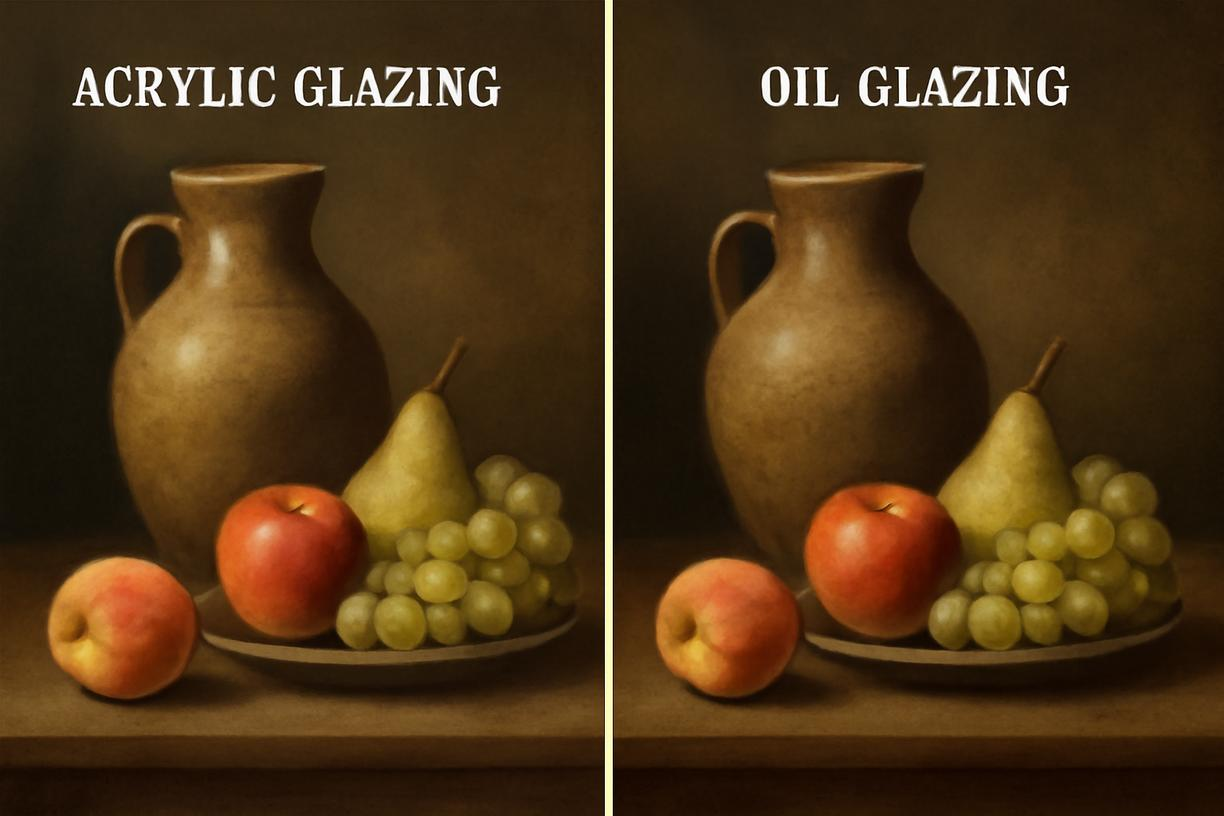
Understanding glazing: why it still matters
Acrylic vs oil glazing differences, examples of old masters style with modern acrylics & is a common search for painters trying to decide which approach gives the glow and depth they want. Glazing remains a powerful way to create luminous color and subtle atmosphere by building translucent layers rather than relying on opaque strokes. Oil glazes traditionally deliver very long working times and deep optical mixing while acrylic glazes dry faster and can be modified for extended open time, as discussed by Just Paint. Understanding these basic contrasts helps you make material choices that match the look you want and the time you have.
Materials, mediums, and practical choices
Acrylic and oil glazes require different mediums and handling, so artists should choose binders and solvents with intention; for acrylics use glazing mediums and for oils consider refined linseed or alkyd mediums. How different are acrylic and oil glazes? Acrylic glazes dry quickly and let you build many thin layers in a short time while oil glazes stay workable longer and can create richer optical depth, which is why old masters favored oils but modern acrylic systems can approximate the effect. For step by step glazing techniques and mixing ratios see Artschool.nu. Has a painter ever achieved oil like depth with acrylics? Yes, with slow-drying acrylic mediums, careful layering, and attention to translucency you can approach the old masters look.
Examples: old masters style with modern acrylics
Acrylic vs oil glazing differences, examples of old masters style with modern acrylics & can be seen in contemporary demonstrations where artists emulate transparent flesh tones, luminous shadows, and glazed glazes over underpaintings. Watch a modern demonstration to see the process in action and note how glazing builds from warm underlayers to cool translucent finishes, like in this practical demonstration on YouTube. Is a modern acrylic approach less authentic than oil? For many viewers the optical results are the important part, and skilled glazing with acrylics can produce equally convincing luminosity when done with respect for layering and light.
Tips, cautions, and where to find help
Acrylic vs oil glazing differences, examples of old masters style with modern acrylics & lead to a few practical rules: keep layers thin, follow fat over lean in oils, allow full curing before varnishing, and test adhesion on sample panels. Is a glazed surface fragile? It can be if layers are too thick or improperly cured, so follow manufacturer guidance and give oil paintings months to cure before varnish while acrylics typically need less time. If you want help finding an artist to paint or translate your idea into a piece, visit our commission page and Sara Kelly-Crockett will either do the work or help you find the right artist to make your dream piece. We do not offer lessons or photographic services, but we do offer prints of original work in our shop for those who want museum quality reproductions.
Acrylic vs oil glazing differences, examples of old masters style with modern acrylics & is worth exploring whether you are learning glazing for portraits, still lifes, or atmospheric landscapes. Does a painter need special grounds to glaze successfully? A stable, well-prepared ground improves adhesion and longevity, so prime your panel or canvas appropriately for oils or acrylics and experiment on samples before committing to a final work. By combining careful material choices with observation of classical glazing strategies you can achieve luminous, layered color while choosing the medium that fits your schedule and style.


